Book Publishing Trends 2026: What's Changing and What It Means for Authors
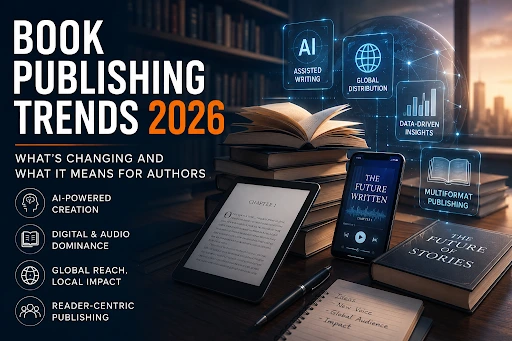
The publishing industry is entering a new era. Rapid growth in technology, shifting consumer behaviour, and developing distribution channels are changing how books are written, published, marketed, and sold. For authors, this brings both challenges and opportunities — whether you're working with book publishing services, considering self-publishing , or preparing your first manuscript for release. Understanding market trends can help you make effective decisions and increase the level of book success.
In 2026, publishing not only means printing a book. Succeeding in this industry is making your book visible, engaging audiences, offering a variety of different formats, and making smart publishing decisions. Discover how these and other trends will impact your success as an author.
How Technology Is Transforming Publishing
Technology frequently changes every aspect of the publishing process, from manuscript assessment to reader communication. Digital innovation is pushing publishers and authors to work more efficiently than ever before.
AI Is Now Central to Publishing Operations
Artificial Intelligence is now a more worthy tool throughout the publishing ecosystem. Many professional authors and book publishing companies are now using an AI-powered system to study market trends, determine the reader's preference, optimize metadata, and marketing efforts. With the help of AI, authors can find which genres are getting popular, identify keyword opportunities, and improve understandability across online platforms.
This implies that for authors, decisions regarding publication are becoming more and more data-driven. However, even as AI becomes increasingly sophisticated, the art of storytelling, emotions, and innovative thinking remains irreplaceable.
The most successful authors in 2026 are those who combine creativity with data-informed publishing strategies.
Reader Personalization Through Data and AI
Today's reader expects feasibility by personalized experience. Online retailers, reading platforms, and subscription-based modules use advanced algorithms to suggest books based on user behavior and experience.
Factors often analyzed include:
- Reading history
- Genre interests
- Purchase patterns
- Review activity
- Engagement metrics
These trends can help to create accurate book categorization, metadata optimization, and keyword targeting, which are more important than ever.
Authors who know how recommendation systems work are improving their visibility and reaching their targeted audience.
Publishing Models Are Creating More Opportunities
The publishing journey is no longer dependent on a single route. Authors now have multiple options for bringing their work to market.
Hybrid Publishing Is Gaining Legitimacy
In the past, authors usually chose between traditional publishing and self-publishing. Today, hybrid publishing has become a respected alternative.
Hybrid publishing merges professional publishing support with great author control. Writers generally contribute to production costs while getting access to editing, design, distribution, and marketing experience as well.
Today's professional services offer hybrid publishing packages because they provide:
- Faster publishing timelines
- Greater creative control
- Higher royalty percentages
- Professional production standards
- Flexible marketing options
As the industry changes, hybrid publishing is now a suitable option for authors who are looking for a balance between independent and expert guidance.
Self-Publishing Market Continues to Expand
Self-publishing will be one of the fastest-growing segments of the publishing industry. Digital publishing platforms have eliminated many traditional barriers, allowing authors to publish directly and maintain full ownership of their work.
Modern self-publishing services offer full support, including:
- Developmental editing
- Copyediting
- Cover design
- Formatting
- Distribution management
- Marketing assistance
Behind every successful author is a change in perception of self-publishing; readers are now looking for quality, not for labeling, as long as the book delivers value, entertainment, or knowledge. Readers are ready to welcome independently published titles.
How Readers Are Discovering Books in 2026
The success of publishing increasingly depends on understandability. Even exceptional books can struggle if they never reach the reader.
BookTok and Social Discovery Are Reshaping Demand
Platforms like TikTok, Instagram, and YouTube have changed how readers discover new titles. Book-looking communities can create huge visibility and make sales through authentic suggestions.
BookTok continues to push purchasing behavior across multiple genres.
Readers usually trust recommendations from valued readers more than traditional advertisements. As a result, books that get emotional engagement, discussions, and community interaction perform well.
Authors who actively engage with readers online can build strong relationships and increase long-term success. See our complete guide to book marketing for practical strategies.
Direct-to-Reader Strategies Are Growing
More writers are engaging directly with their readers rather than only using bookstores as a means of reaching them.
This strategy often includes:
- Author websites
- Email newsletters
- Reader communities
- Exclusive content
- Membership programs
- Direct sales platforms
Building a direct audience provides several advantages.
They have greater access to useful information about customers, more control over marketing initiatives, and less reliance on constantly shifting platform algorithms.
Direct-to-reader publishing is becoming an important component of long-term author success.
Audiobooks Are No Longer Optional
Audiobook usage continues to grow globally as readers look for a more flexible way to enjoy content. People increasingly listen to books while:
- Commuting
- Exercising
- Traveling
- Working
- Completing household tasks
As a result, audiobook has changed from a supplementary format into a core publishing channel. Many book publishing solutions now include audiobook production as part of their standard publishing offerings.
Publishing a book in multiple formats allows authors to:
- Reach broader audiences
- Increase accessibility
- Create additional revenue streams
- Improve market competitiveness
For those considering future releases, audiobook creation should definitely be a priority in the early stages of publishing.
The Rise of Diverse Voices and Specialized Markets
The requirements of today's readers keep changing. People are more interested in reading something truly new, different, and meaningful.
Diverse Storytelling and Niche Genres Are Outperforming
Among the biggest book publishing trends of 2026, one of them certainly deserves special attention. People look for:
- Authors who haven't been represented before
- Books describing interesting cultures
- Stories related to their hobbies
- Literature from communities they identify with
- Writing by authors they really relate to
Thanks to modern digital marketplaces, it's getting easier for people to choose the books that meet their needs.
It provides a lot of chances for aspiring authors. Rather than trying to cater to everybody's preferences, some authors find success in targeting specific audiences with their writing.
Publishing Trends at a Glance
| Trend | Impact on Publishing | Opportunity for Authors |
|---|---|---|
| Artificial Intelligence | Improved efficiency and analytics | Better market positioning |
| Personalized Recommendations | Enhanced discoverability | More targeted audience reach |
| Hybrid Publishing | Flexible publishing options | Professional support with control |
| Self-Publishing Growth | Lower barriers to entry | Higher ownership and royalties |
| BookTok Marketing | Viral reader engagement | Increased visibility |
| Direct-to-Reader Sales | Stronger audience relationships | Better long-term revenue potential |
| Audiobook Expansion | Multi-format consumption | Additional income streams |
| Diverse & Niche Content | Growing reader demand | Less competition and loyal audiences |
What These Trends Mean for Your Publishing Strategy
Understanding industry trends is only useful when combined with action.
Authors preparing to publish in 2026 should focus on several key priorities:
Prioritize Professional Quality
Readers have unlimited options available. Investing in editing, formatting, cover design, and production quality remains crucial.
Build an Audience Before Launch
Profitable books usually begin with an engaged audience. Start building your platform early via social media and content marketing.
Think Beyond Print
Modern readers perceive content in different ways. Offering e-books and audiobooks with print editions can significantly expand reach.
Choose the Right Publishing Path
Whether you choose a publishing ecosystem, hire a book publishing company, or do independent publishing, select a method that supports your goals, budget, and decision.
Final Thought
The publishing industry has never been as open, dynamic, and competitive as it is in 2026. Innovations in artificial intelligence, audio publishing, social networking, direct-to-reader marketing, and publishing models will offer many opportunities to authors from all corners of the world.
However, the core of publishing has not changed. Stories and ideas that resonate with the readership are always in high demand. Authors who are getting support of technologies in the publishing process without compromising writing quality will have a bright future. By collaborating with reputable professional publishing organizations , considering innovative approaches to book publishing, and adjusting to trends, writers will be well-prepared for the upcoming challenges.
The winners of 2026 will be those who master the trends rather than merely adapt to them.
frequently  asked questions
Is self-publishing still a good option in 2026?
Absolutely. Self-publishing has come a long way from what it used to be. You can now get professional editing, cover design, formatting, and distribution all in one place. And the best part? You keep full ownership of your work. Readers today don't care about the publishing label — they care about quality.Can AI help with publishing, or does it take away from creativity?
It helps, but it doesn't replace you. AI is great for understanding market trends, finding the right keywords, and optimizing your metadata. But a story that genuinely connects with people? That's still entirely on you. The authors winning in 2026 are the ones using AI as a smart tool, not a shortcut.What's the difference between hybrid publishing and self-publishing?
With self-publishing, you handle everything yourself. Hybrid publishing gives you a professional team — editors, designers, distribution support — while you still keep creative control. You share some of the costs, but you also earn higher royalties than you would with a traditional deal.Do I really need an audiobook?
If you want to reach more people, yes. A lot of readers today listen while commuting, working out, or traveling. They're not going to sit down with a print copy — but they'll absolutely listen. Audiobooks also create an extra income stream, and most publishing services now include audio production in their packages.Do BookTok and social media actually drive real sales?
It does, and it's only getting stronger. People trust recommendations from real readers far more than traditional ads. One honest, emotional review can go viral and sell thousands of copies overnight. In 2026, ignoring social media as an author is simply not an option.


